Youth Pilgrimage: Walking in the Footsteps of Jonathan Daniels - Sept. 2026
By Barbara MacLeod
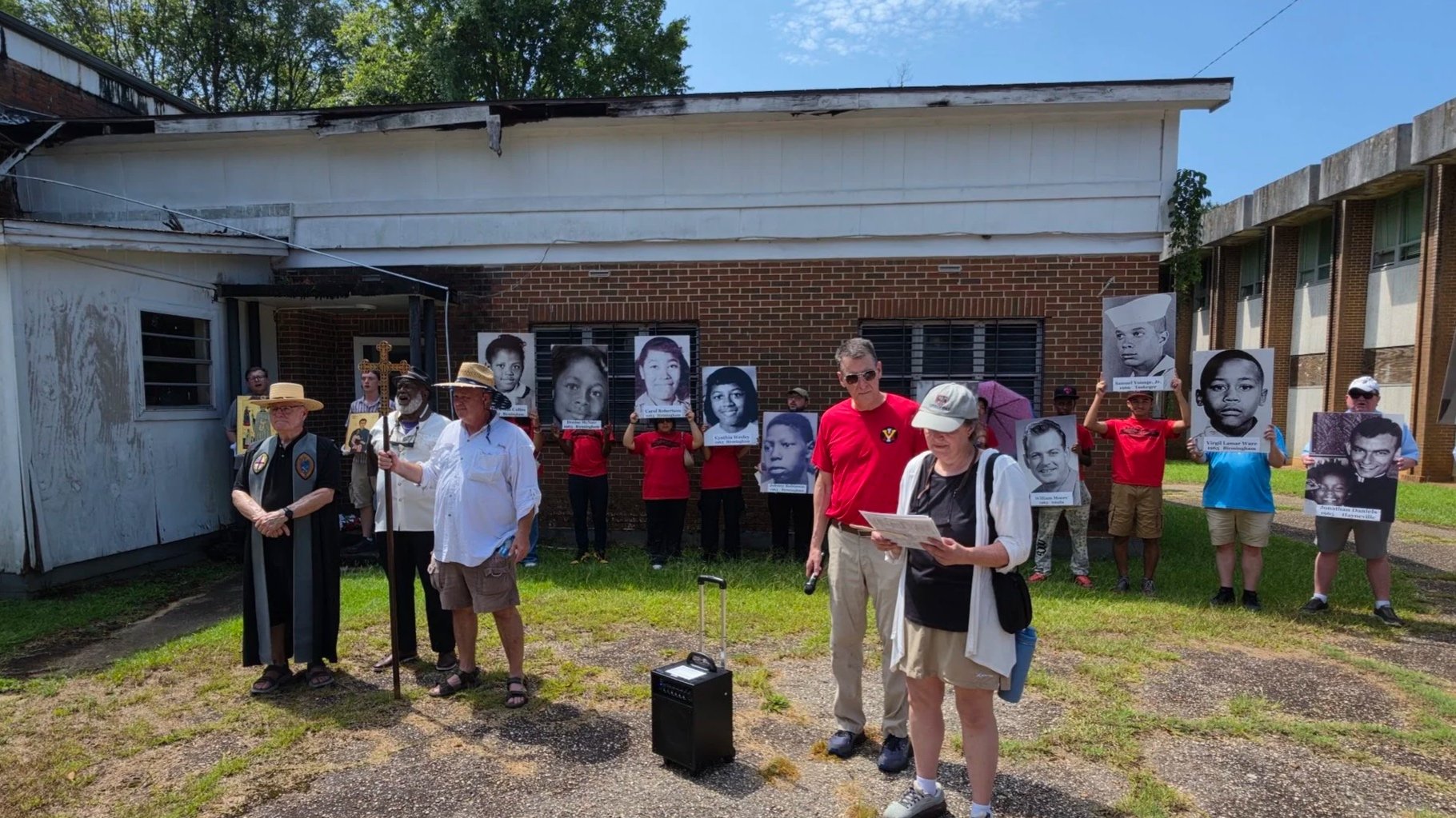
A group of Episcopal teenagers from across the state traveled to Alabama in August for a pilgrimage that brought them face to face with some of the most difficult chapters of American history. It also challenged them to consider what their faith asks of them today. The impetus of the four-day trip was to follow in the footsteps of Keene seminarian Jonathan Daniels, who was murdered in Alabama in 1965, saving a young Black activist from a bullet.
Seventeen-year-old Ava Tennett of Goffstown says the experience revealed how much of civil rights history she did not know. “I was personally impacted by how much I learned that schools simply do not teach,” she said. “We visited museums and landmarks and spoke with people who dedicate their lives to making sure this history and truth are remembered.”
The five young people were accompanied by four adult chaperones. Their journey included visits to significant historic sites before culminating in the annual Jonathan Daniels and the Martyrs of Alabama Pilgrimage in Hayneville.
The idea for the trip began a year earlier, when the Rev. Kelly Sundberg Seaman traveled to Alabama for the 60th-anniversary pilgrimage honoring Daniels. She realized what a meaningful experience it could be for young people to learn about history in the places where it actually happened.
The Rev. George Swenson, who oversees youth ministry for the diocese, says an important aspect of the pilgrimage was helping the teenagers understand the broader history surrounding Daniels' decision to come to Alabama and the role faith communities played in the Civil Rights Movement.
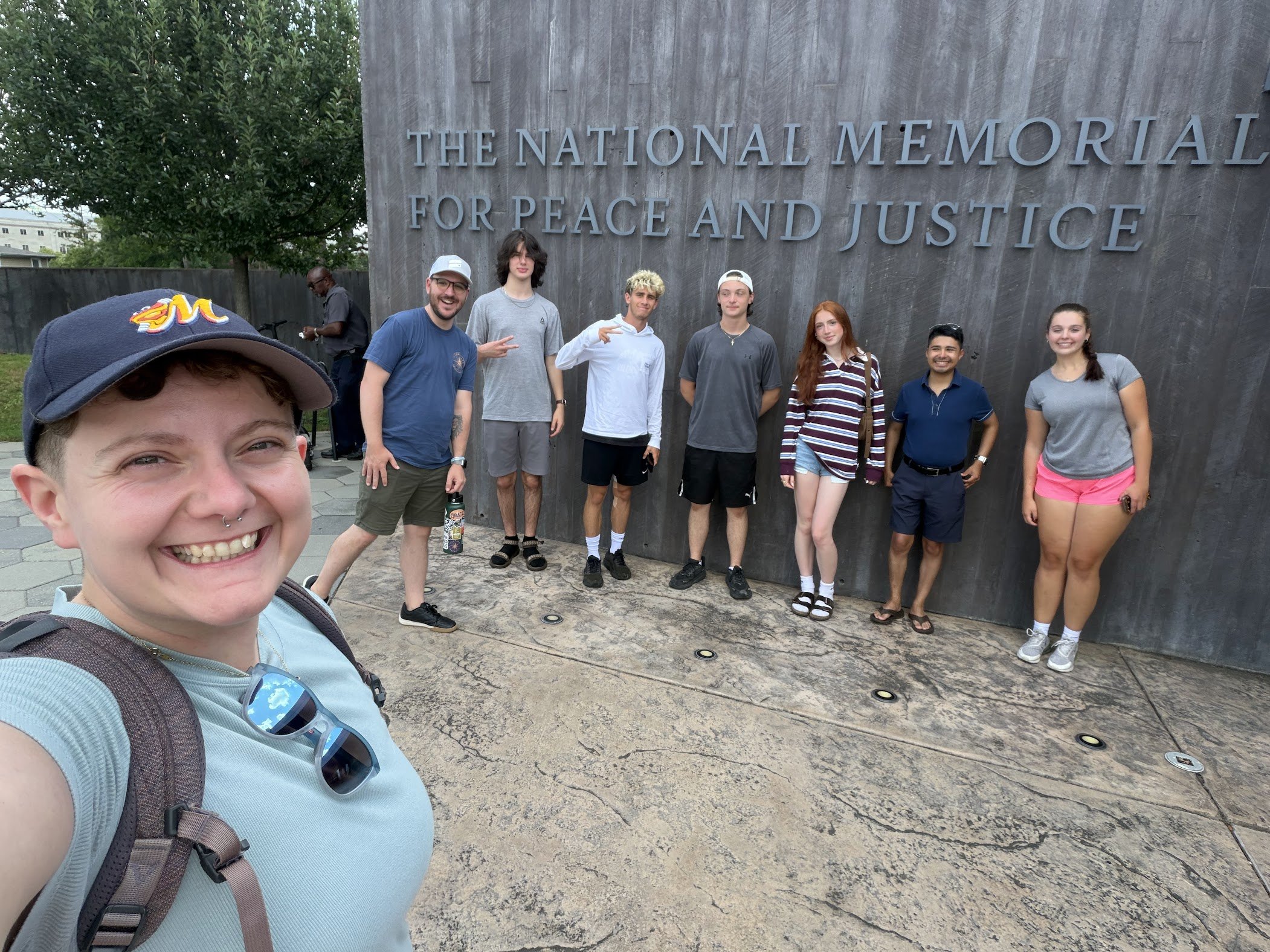
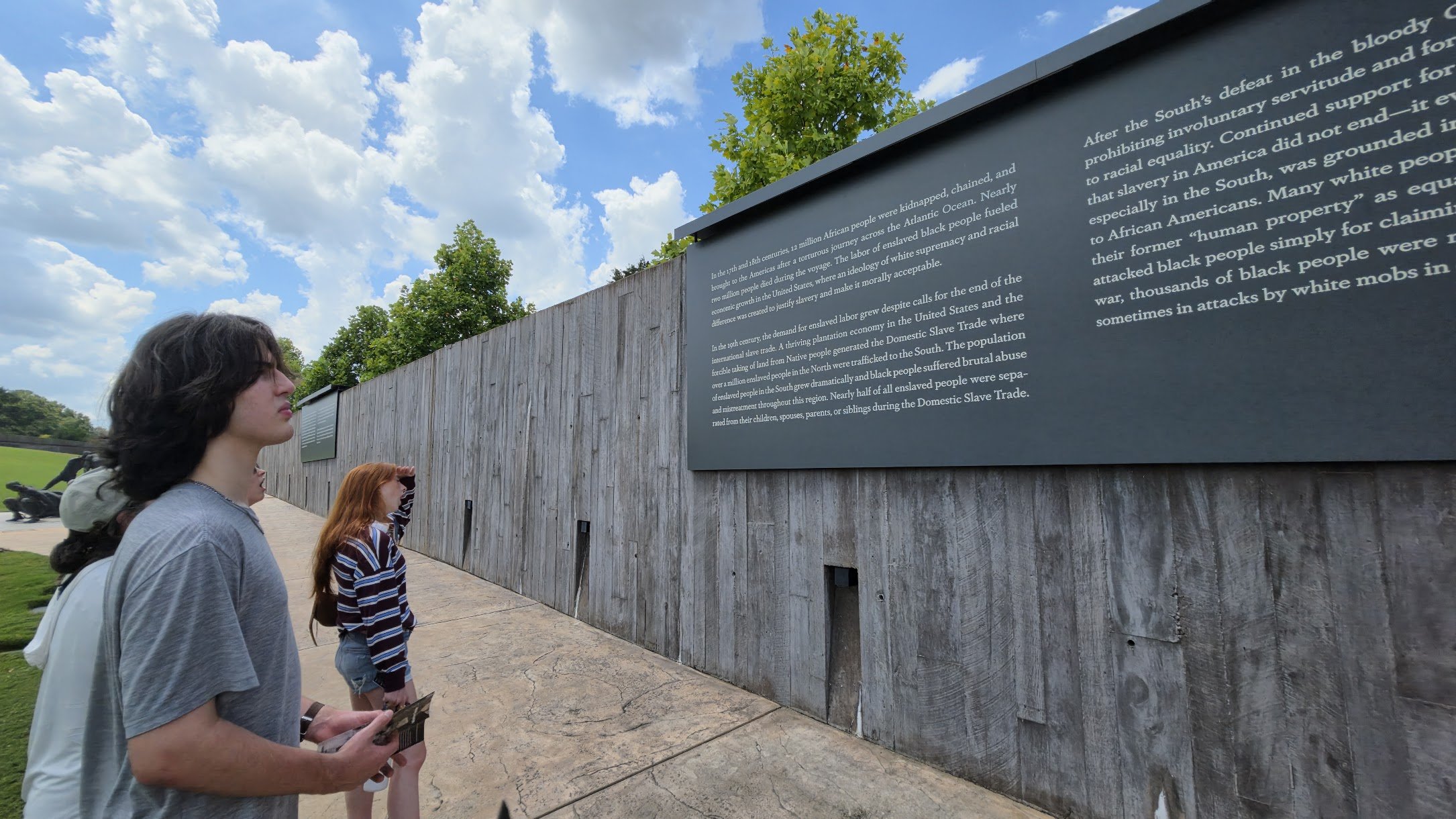
At the National Memorial for Peace and Justice in Montgomery, the group came face to face with the history of racial terror and lynching in America. Ava (pictured above, far right) recounted how surprised she was by the scope of the violence.
“I was shocked to see how many people were killed by lynching. I do not think I fully understood how long this had been happening or the severity of it until I was surrounded by the names of the victims.” Ava went on to say, “The experience made me realize how important it is to seek out history beyond what is taught in a classroom and to make sure these stories are remembered and shared.”
The Rev. George was similarly moved.
“Some monuments contained so many names that the lettering had to become smaller to accommodate them,” he says. On others, multiple victims shared the same last name – evidence of entire families affected by racial violence.”
At the end, the group sat quietly together; “We were all just sitting there in this deep contemplative silence letting it all soak in,” Rev. George recalled.
The Legacy of Jonathan Daniels
For Episcopalians from New Hampshire, the history of the Civil Rights Movement has an especially powerful connection through Jonathan Daniels.
Daniels grew up in Keene and graduated from the Virginia Military Institute before eventually entering Episcopal Theological School in Cambridge, Massachusetts. In March 1965, he heard the Rev. Dr. Martin Luther King Jr.'s call for clergy and others to come to Alabama following the violence against voting-rights marchers in Selma.
Daniels went.
While many who responded to King's call eventually returned home, Daniels remained in Alabama, working alongside Black residents and civil rights activists.
In August 1965, Daniels and other demonstrators were arrested and taken to the county jail in Hayneville. After being held for several days, they were unexpectedly released. Daniels and three companions walked to a nearby store. There they were confronted by a white man carrying a shotgun. When the gun was aimed at 17-year-old Ruby Sales, Daniels pushed her out of the way and was struck by the blast. He died instantly. He was 26 years old.
For the New Hampshire group on this pilgrimage, Daniels was no longer simply a historical figure from their home state. They stood in the places where the final days of his life unfolded.
The journey also explored a dimension of the Civil Rights Movement that the Rev. George believes is often missing from what students learn in school: the central role of churches. “We asked the students: What does faith require when people encounter injustice? We talked a lot about courage.”
According to Rev. George, some of the most important conversations didn't happen inside a museum or at a historic site. He says the five teens arrived from different communities and brought different personalities and perspectives to what they were experiencing.
“Hearing their thoughts and experiences challenged me to think about what I was learning in new ways,” Ava said.
There were lots of conversations about history and faith, but the pilgrimage wasn't all somber. The teenagers laughed, explored a different part of the country and got to know one another. “I left Alabama with four new friends,” Ava said. “We talked about history and faith, but we also got to know each other and create memories together. The trip was incredibly powerful and moving, but it was also a lot of fun.”
Ava’s advice to another teenager considering the pilgrimage is simple: “Go. This is truly a trip of a lifetime.”
For the Rev. George Swenson and the other adults who made the journey possible, that experience was part of the goal: to give young Episcopalians an opportunity to encounter difficult history, consider the Church's place within it, and reflect on what courage and faith might require in their own lives.
The diocese hopes the Alabama pilgrimage will become a signature experience for its growing youth ministry program and would like to offer it again.

A New Chapter Begins at Christ Church in Portsmouth
On a beautiful sunny day in Portsmouth, more than 150 people gathered on the grounds of Christ Church, where God’s presence seemed to be felt all around — in the warmth of the morning, in the prayers offered, in the memories held in the land, and in the hope of what is yet to come.
With shovels in hand and gratitude in abundance, leaders from the Episcopal Church of New Hampshire, Christ Church Portsmouth, Portsmouth Housing Authority, HAVEN, and the Black Heritage Trail of New Hampshire broke ground on a project that will transform the Christ Church property at 1035 Lafayette Road into a place of housing, healing, worship, historic stewardship, and long-term community care.
The project is made possible through a no-cost 98-year lease of church land by the Episcopal Church of New Hampshire; a remarkable commitment that will make this land available for public good for nearly a century. What has long been sacred ground for worship and community life will now be reimagined to meet some of the most urgent needs of the wider Portsmouth community.
When complete, the site will include 44 permanently affordable workforce housing units, a new headquarters and transitional housing for HAVEN (a nonprofit that serves survivors of domestic and sexual violence), a potential center for early childhood education, a more sustainable worship space for Christ Episcopal Church, and continued care for the African Burying Ground at Langdon Farm.
For Bishop Rob, the day marked not only the beginning of construction, but the beginning of a new chapter in the life of the land, the congregation, and the wider community. “Through this extraordinary collaboration, this property is being reimagined in a way that reflects the church's mission to use its land and resources in service to others. At a time when communities everywhere are struggling with housing affordability, safety, belonging, and the future of faith-owned spaces, this partnership offers something rare and hopeful: a concrete example of land being used not simply for one institution’s needs, but for the common good,” he said.
The day was filled with signs of both reverence and renewal. There was joy in the gathering, but also a deep awareness of the history held by the land. The site includes the African Burying Ground at Langdon Farm, a sacred place that will be protected during construction and stewarded with care.
JerriAnne Boggis, Executive Director of the Black Heritage Trail of New Hampshire, spoke powerfully about the meaning of that commitment; “For descendants and for all who care about truth, this moment carries particular meaning,” Boggis said. “At a time when there are efforts across our country that seek to diminish, erase, or sanitize the history of slavery, we stand here witnessing a different path. No one has looked away from this history. No one has attempted to build over it or pretend it never happened. Instead, those responsible for this project have chosen to proceed thoughtfully, deliberately, and with care. They have recognized that the people buried here deserve respect, and that the history they represent deserves preservation. That is what responsible stewardship looks like.”
For Christ Church, the groundbreaking was a moment of both letting go and leaning forward in faith. The congregation is allowing its beloved church building to be repurposed for HAVEN’s work, while preparing for a more sustainable, right-sized worship space on the site. The Rev. Steve Falci of Christ Church told the crowd; “For nearly a century and a half, Christ Episcopal Church has stood as part of Portsmouth’s spiritual and civic fabric. Since our founding in the 1880s, we’ve served generations — always striving to be a place of welcome, worship, and compassion.”
Rev. Steve honored the parishioners who founded Christ Church in Portsmouth’s West End to serve working-class families and immigrants; those who rebuilt after a devastating 1963 fire destroyed the original church building; those who stewarded the congregation for the past 60 years on Lafayette Road; and the current members of Christ Church, whom he described as “resilient faithful.” Their willingness to imagine a new future for the property is at the heart of the project now taking shape.
For HAVEN, the day represented the culmination of an eight-year search for a permanent home in Portsmouth, where the organization has been rooted since its founding 46 years ago. HAVEN is the largest violence prevention and support services nonprofit agency in New Hampshire.
Kathy Beebe, Executive Director of HAVEN, said the Diocese’s long-term, no-cost commitment of the property creates a once-in-a-generation opportunity. “We are deeply grateful to the Diocese for this incredible gift; not only because it will provide HAVEN with a forever home, but because it brings together community. For survivors of domestic and sexual violence, community is connection, and connection is healing. That is the premise for what HAVEN is building and what this partnership represents.”
HAVEN’s permanent home will be located in the renovated church space, with an addition that includes seven newly constructed transitional housing units.
For Portsmouth Housing Authority (PHA), the project responds to one of the region’s most pressing challenges: the need for housing that working people can afford. The 44 permanently affordable rental apartments will give preference to local workers and childcare workers, with a focus on people earning 60 percent of the area median income. “I am overflowing with gratitude that this project has become a reality,” PHA Executive Director Craig Welch said. “Portsmouth needs housing that working people can actually afford, and opportunities to create it are rare. The Diocese’s no-cost 98-year lease gives this project the long-term stability needed to create permanently affordable homes while joining with HAVEN and Christ Church in a broader community partnership. It is exactly the kind of creative response the Seacoast needs.”
As the gathering came to a close, there was a sense that something more than ground had been broken. A new way forward had been opened.
This project is more than a redevelopment. It is a witness to what can happen when faith communities, housing leaders, survivor-service organizations and historic stewardship partners come together with imagination, courage, and care. It is a reminder that sacred ground is not only preserved by looking back, but also by asking how it can serve God’s people now.
At 1035 Lafayette Road, a new chapter has begun — one rooted in housing, healing, worship, remembrance, and the common good.
Construction is now underway and is expected to be completed in late summer 2027.
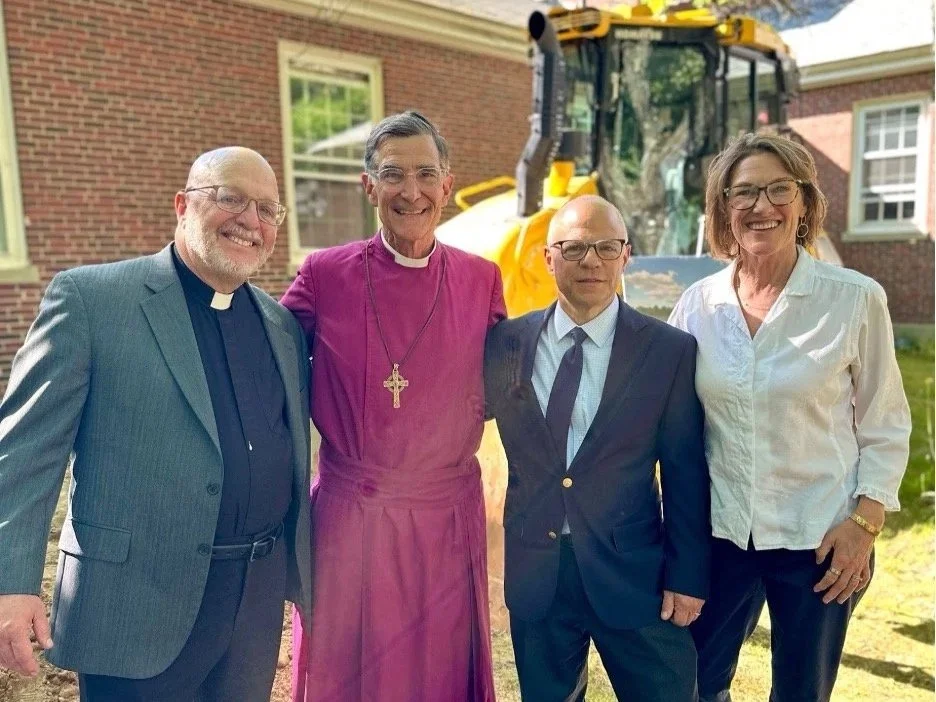
Rev. Steve Falci, Bishop Rob Hirschfeld, Diocese Special Projects Manager Benge Ambrogi, Diocese Communications Consultant Barbara MacLeod at the Portsmouth project groundbreaking.
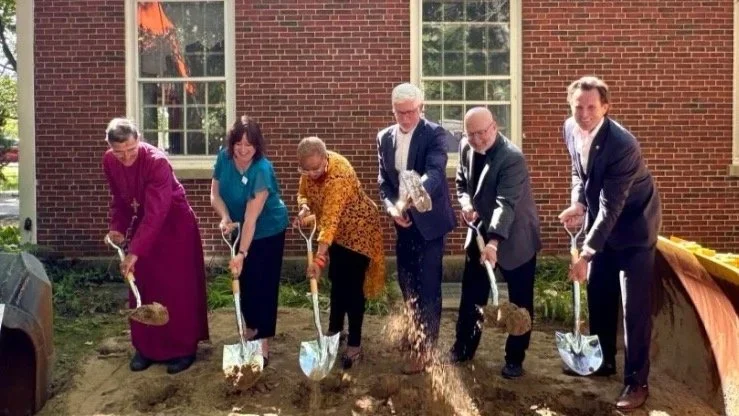
L-R Bishop Rob, HAVEN’s Kathy Beebe, Black Heritage Trail Exec. Dir. JerriAnne Boggis, PHA Exec. Dir. Craig Welch, Rev. Steve Falci, Portsmouth Mayor Deaglan McEachern
Ministry, Marriage, and the Second Half of Life: Joe and Audrey Rose
By Christina C. Gordon
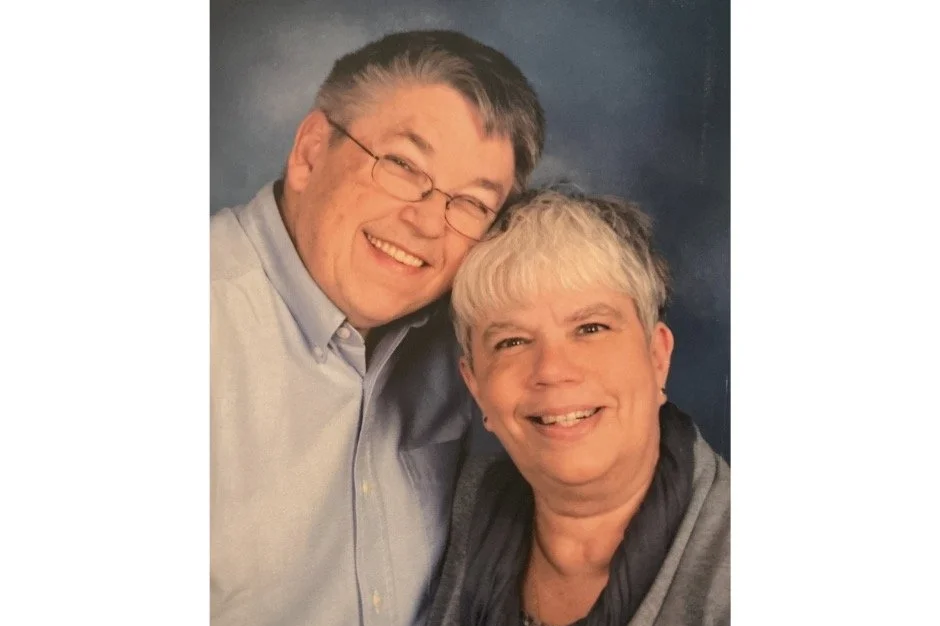
When Joe and Audrey Rose talk about ministry, they begin with stories: stories of surprise, hesitation, and moments when God showed up in ways they never expected.
By most accounts, their story should have been winding down. Joe had retired after a 40-year career in the propane industry. Audrey had spent years in business and doing volunteer work, and for a long stretch, away from church altogether.
Instead, what unfolded was a shared calling that is reshaping small congregations and quietly but dramatically renewing community life.
“I was not going,” Audrey says, laughing as she recalls the Episcopal Revival that changed everything. A friend kept encouraging her to attend. “No, absolutely not,” she insisted. But she went anyway.
There, listening to Bishop Michael Curry, Audrey experienced something she still struggles to describe. “It was probably the first time in my life I totally felt the presence of God.”
That moment changed the course of her life. Later, at a conference in Atlanta, she encountered interactive worship exhibits created by experiential worship curator Lily Lewin. Standing in a quiet ballroom filled with prayer stations and liturgical displays, Audrey felt a clear call: this is what you are meant to do.
“I didn’t have any background,” she says simply. “I just started.”
Audrey did complete her lay preaching certificate through the NH School for Ministry (SFM), a member of the Iona Collaborative network. Today, she preaches regularly in congregations across the region and is known for creating worship experiences that invite participation and connection: prayer trees open to the wider community, large-group puzzles tied to liturgical themes, interactive prayer stations that draw people in rather than asking them to sit passively in the pews.
“It is lighting that little spark and letting it burn into a flame,” Audrey says.
Joe’s call unfolded differently.
For years, he says, he kept putting God off with humor and excuses. Retirement finally changed that. While preparing to begin coursework through SFM, Bishop Rob Hirschfeld called him into his office, slid a business card across the desk, and then handed him a key.
The address belonged to what is now the Episcopal Mission in Franklin, NH: a church building that had sat closed for nearly twenty years.
Joe’s first initiative was a simple weekly meal called “Lunch with Jesus.” Worried nobody would come, he invited two friends to help fill the room. Twelve people showed up.
Soon, others began returning too, including the church’s former organist, who arrived carrying the church’s crucifix she had safeguarded for years. Week by week, more people brought back items they had been keeping safe, waiting, perhaps, for the church to live again.
Today, the Episcopal Mission of Franklin hosts weekly worship and serves as a vibrant part of the community.
Joe later entered a three-year formation program through SFM and was ordained in December 2023. The next day, he began serving as vicar at St. John the Evangelist in Dunbarton, a congregation that had been without clergy for seven years.
Average Sunday attendance hovered around eight people. The church looked closed. When Audrey contacted the town about adding St. John’s to local webpages and social media listings, she was told Dunbarton didn’t have an Episcopal church.
“They were in a liturgical desert,” Joe says.
The work of rebuilding was slow and sometimes difficult. Congregations shaped by years of decline and uncertainty often carry grief, fear, and resistance to change. During a NH Episcopal Diocese workshop hosted by Iona Collaborative's Thriving Congregations program, Joe encountered a framework for understanding congregational transition that helped him name those emotions more clearly.
“It all made sense,” he recalls. “They were angry, fearful, disoriented.”
Back at St. John’s, Joe shared the resource with the congregation and spoke openly about grief, change, and hope.Once the congregation began finding stability internally, Joe encouraged members to look outward.
“I’m not telling you what the mission is,” he told them. “What is in your hearts? How do you want to serve God?”
At a town meeting, Joe heard leaders discuss growing isolation among seniors. Back at church, he looked around: a parish hall, a kitchen, and people with time and a gift for hospitality.
The answer became a monthly senior lunch. Free meals. No pressure. Just a place where people could gather, talk, and feel known. The lunches quickly grew. Community members with no connection to the church began showing up, not only to eat, but to volunteer. Flowers appeared on tables. Donations exceeded costs. Relationships formed.
“You can just see the Holy Spirit at work,” Audrey says.
The congregation itself began to change as well.
On Easter Sunday, 27 people filled the pews. A young man in his twenties sat at the church’s historic pump organ, keeping the pedals moving just as his grandfather once had.
“A couple weeks ago, someone asked, ‘What else can we do?’” Audrey recalls.
Joe smiles. “You can just see the church coming alive.”
The Future
That movement – from maintenance to mission – is at the center of Joe and Audrey’s shared ministry.
Audrey now leads Bible studies, preaches regularly, and hosts online evening prayer four nights a week. What began during the COVID-19 pandemic has grown into an online ministry reaching people from Texas to California to France.
“I think that’s part of the future of the church,” she says.
Together, Joe and Audrey embody a model of ministry that feels increasingly important: collaborative, locally rooted, and open to the gifts of both lay and ordained leadership. “Lay leaders can have just as much calling,” Audrey says. “We need to make it easier for them to pursue it.”
For the past two Christmas Eves, a neighbor who does not attend St. John’s has quietly arrived before worship to line the church driveway with lanterns.
Nobody asked him to do it.
He simply comes, and the light is there when the congregation arrives.
That is the kind of ministry Joe and Audrey Rose are building: not ownership, but stewardship. Not a finished picture, but something still unfolding.
And that something can serve as inspiration and a blueprint for the broader Episcopal community in New Hampshire and beyond.
Theology for All - Expands Learning Across the Diocese
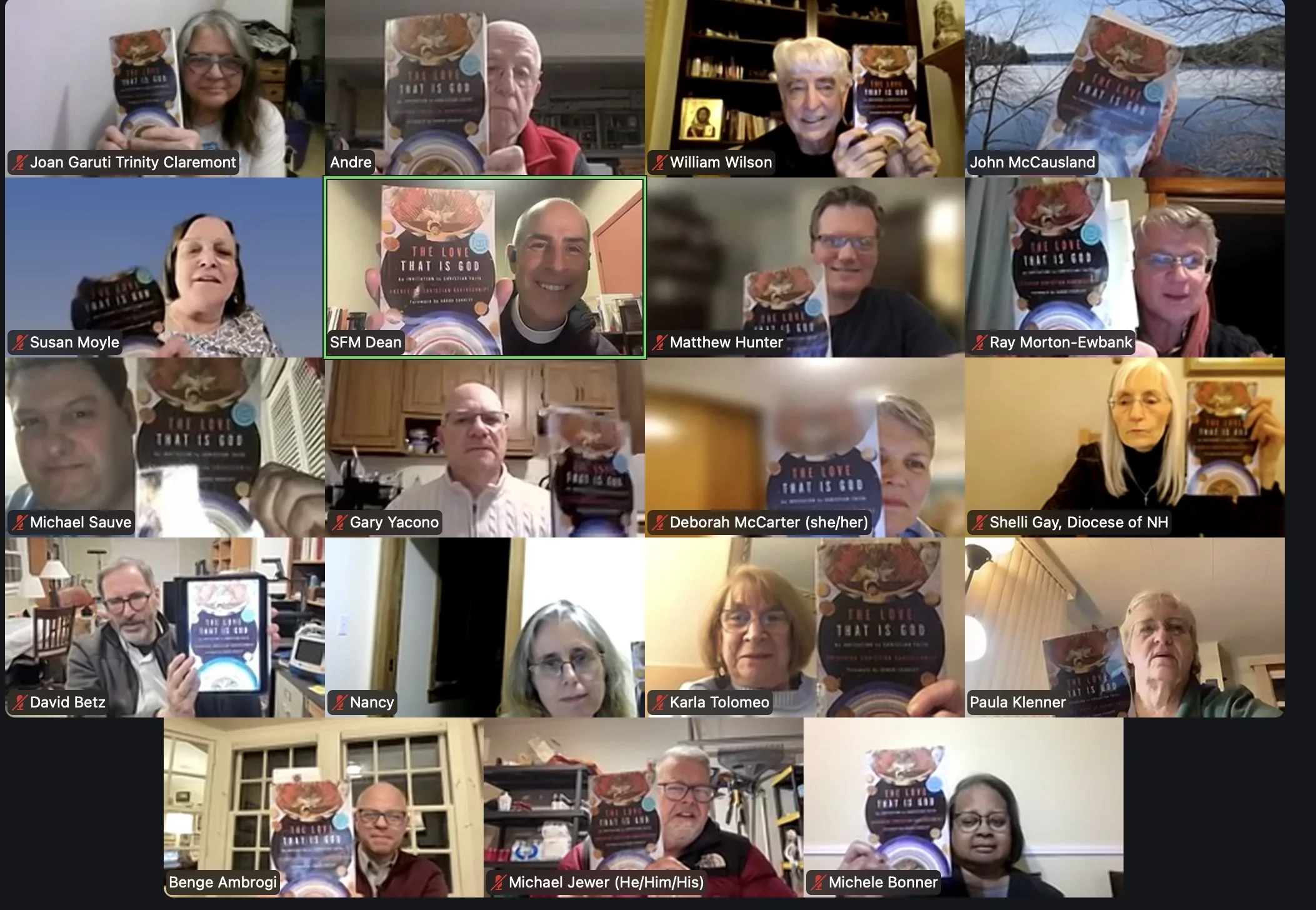
It’s a Thursday night, and twenty people have gathered on Zoom to discuss theology and ethics. Participants – mostly lay people – join from across New Hampshire. The conversation is lively, thoughtful, and often punctuated by laughter.
This is the Seminar in Theology and Ethics, part of a new initiative from the Diocese of New Hampshire’s School for Ministry (SFM): Theology for All – a series of courses open to anyone seeking a deeper understanding of Christian faith and practice.
Led by the Rev. Joe Pagano, one of the Deans of the School for Ministry, the 10-week course reflects an intentional broadening of the SFM’s mission. For the past five years, the School has focused primarily on training those preparing for ordination or lay preaching certification. Theology for All expands that work – creating space for anyone in the Diocese who is curious, engaged, and eager to grow.
Participants say the experience is already making a meaningful impact.
“As a result of the class, I’ve found myself looking at familiar things in a different way,” said Karla Tolomeo of Church of the Good Shepherd. “It’s enriching how I understand both Christian ethics and my role in the church community.”
Others note how the course is shaping their experience of worship.
“Last Sunday’s Eucharistic prayer took on extra meaning,” said Ray Morton-Ewbank of Church of the Transfiguration in Derry, “recalling our recent discussion and seeing how it connects to our shared spiritual story.”
For some, the course offers a chance to re-engage with theological study after many years.
“The class has been enormously stimulating,” said the Rev. John McCausland, a retired priest who worships with St. Andrew’s in Hopkinton. “It’s been hard to keep up with academic theology since seminary, and this fills a real gap. The readings and discussion are just what I need.”
Participants are even joining from beyond the Diocese.
“I’m grateful to be part of this learning adventure,” said Gary Yacono, a deacon in formation from the Diocese of Newark. “It’s been informative, engaging, and a pleasure to connect with people from New Hampshire.”
For Dr. Pagano, the course affirms something important: that serious theological engagement is not limited to specialists.
“We are reading works by two of today’s leading theologians,” he said, “and our experience shows that we can read serious theology, seriously. It’s not just for ‘experts,’ and it doesn’t need to be simplified. People can learn together and grow together.”
That spirit of shared learning is at the heart of Theology for All – and it’s just beginning.
In the words of Karla Tolomeo, “Since the class, I have found myself looking at familiar things in a different way, enriching how I view both Christian ethics and my role in the church community. Joe is an extremely knowledgeable and organized facilitator who presents thoughtful questions for discussion based on the readings.”
For those who have taken part so far, the impact is clear: deeper understanding, renewed engagement, and a stronger connection to faith, worship, and one another. The next Theology For All course, What on Earth Should I Do? Useful Pastoral Care Techniques for Lay People, begins June 1. Find out more here.
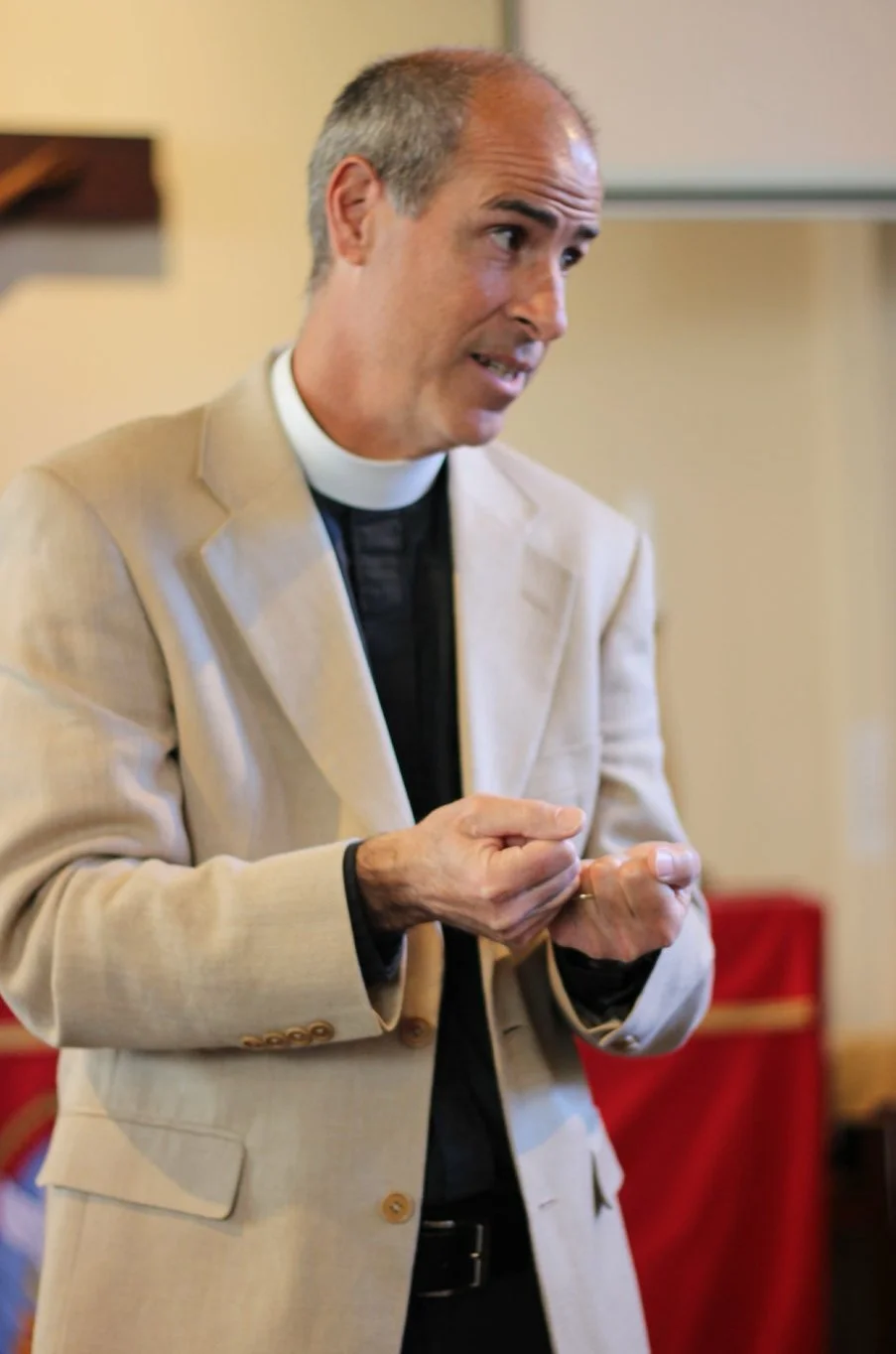
Photo: the Rev. Joe Pagano teaching.
Micah 6 Commission: A Year of Building Relationships for Local Justice
When the Most Reverend Michael Curry, 27th Presiding Bishop of the Episcopal Church, travelled to Portsmouth, New Hampshire last February to speak along with Bishop Rob at the Black Heritage Trail of NH’s celebrated “Tea Talk,” it was a perfect example of the power of the Micah 6 initiative and how it brings people and organizations together in the name of social justice. The event was held in a synagogue, was open to all, and drew a large audience who were thirsty for wisdom and encouragement. The Bishops didn’t disappoint. Their vastly different experiences growing up, their bond of friendship, and their shared faith made for interesting conversation, storytelling and ways to further racial justice. The crowd was mesmerized. This is one example of how the Micah 6 Commission – just one year into its existence – is shaping how the Episcopal Church of NH is taking action with partner organizations.
Now just one year since its formation in April 2025, the Micah 6 Commission is making strides. The Commission was formed as a way to streamline and empower parishes to take action against racism, economic inequity, and environmental degradation. The work is guided by the principles of Micah 6:8, which emphasizes the importance of doing justice, being kind, and walking humbly with God.
“Micah 6 is a guiding call for how we live our faith and baptismal covenant,” says Commission Chair Derek Scalia. “Our world is hurting, and people are yearning for points of light and relief. Through this work, we seek to embody the call to do justice.”
Created to combine our local efforts around reconciliation, earth care, educational equity, and reparations, Micah 6 has found a sibling in the Global Missions Committee, which focuses on international social justice work, while Micah 6 focuses on New Hampshire organizations already doing critical justice work.Rather than creating new programs, Micah 6 focuses on building relationships with these current initiatives. These partnerships reflect shared learning, mutual respect, and a commitment to long-term impact. Among its early collaborations:
Supporting Black Heritage Trail of NH “Tea Talks,” fostering dialogue on race and history
Partnering with the NH Fair Funding Project to advocate for equitable education
Advancing environmental stewardship through the New England Episcopal Path to Creation Justice initiative
John Rowntree, parish treasurer at Good Shepherd Church in Nashua, urges Episcopalians to consider joining churches in Claremont, Keene and Londonderry that are currently participating in the New England Episcopal Path to Creation Justice , a program which provides support and tools to parishes committed to addressing the climate crisis. Rowntree says the Micah 6 Commission contributed a three-year grant to support them. Says Rowntree, “We have done multiple projects to reduce our 148-year-old church’s carbon footprint, including insulation, improving our historic church windows, changing lightbulbs and implementing 35 solar panels. It feels really good to make a difference and helps us be strong financial stewards because we have reduced our energy costs.”
The Commission is made up of 12 members in addition to Bishop Rob. The Commission meets monthly and has held two major planning sessions over the last year.
It has also helped distribute $85,000 in Coit House funds, administered through the New Hampshire Charitable Foundation, to support a wide range of community organizations – from childcare centers and summer camps to youth programs and family services.
At its core, the Micah 6 Commission is grounded in the belief that justice work begins in relationships.
“We are not here to solve every problem,” Commission leaders note. “We are here to listen, to accompany, and to support the work already unfolding in our communities.”
This relational approach is already strengthening parish life across the Diocese. By sharing stories, connecting congregations to opportunities, and deepening engagement, the Commission is helping Episcopalians live out their call to justice in tangible ways.
As the Commission enters its second year, it is building a more intentional structure to sustain and grow this work: strengthening communication, aligning resources, and supporting parishioners in integrating justice, mercy, and humility into every aspect of ministry.
Ultimately, the Micah 6 Commission is an invitation: to listen more deeply, to partner more intentionally, and to participate more fully in the work of healing and justice across New Hampshire. Commission members believe that justice takes root most fully when nurtured in parish communities that pray, learn, and serve together. They are committed to ensuring that the wisdom gained becomes a resource for congregations seeking to deepen their own ministries of justice. These faithful committee members believe that sharing stories and opportunities strengthens parish life and inspires local action rooted in the Gospel.
To share your stories of social justice work at your church or to find out more about Micah 6 please email Derek Scalia at dnascalia@gmail.com.
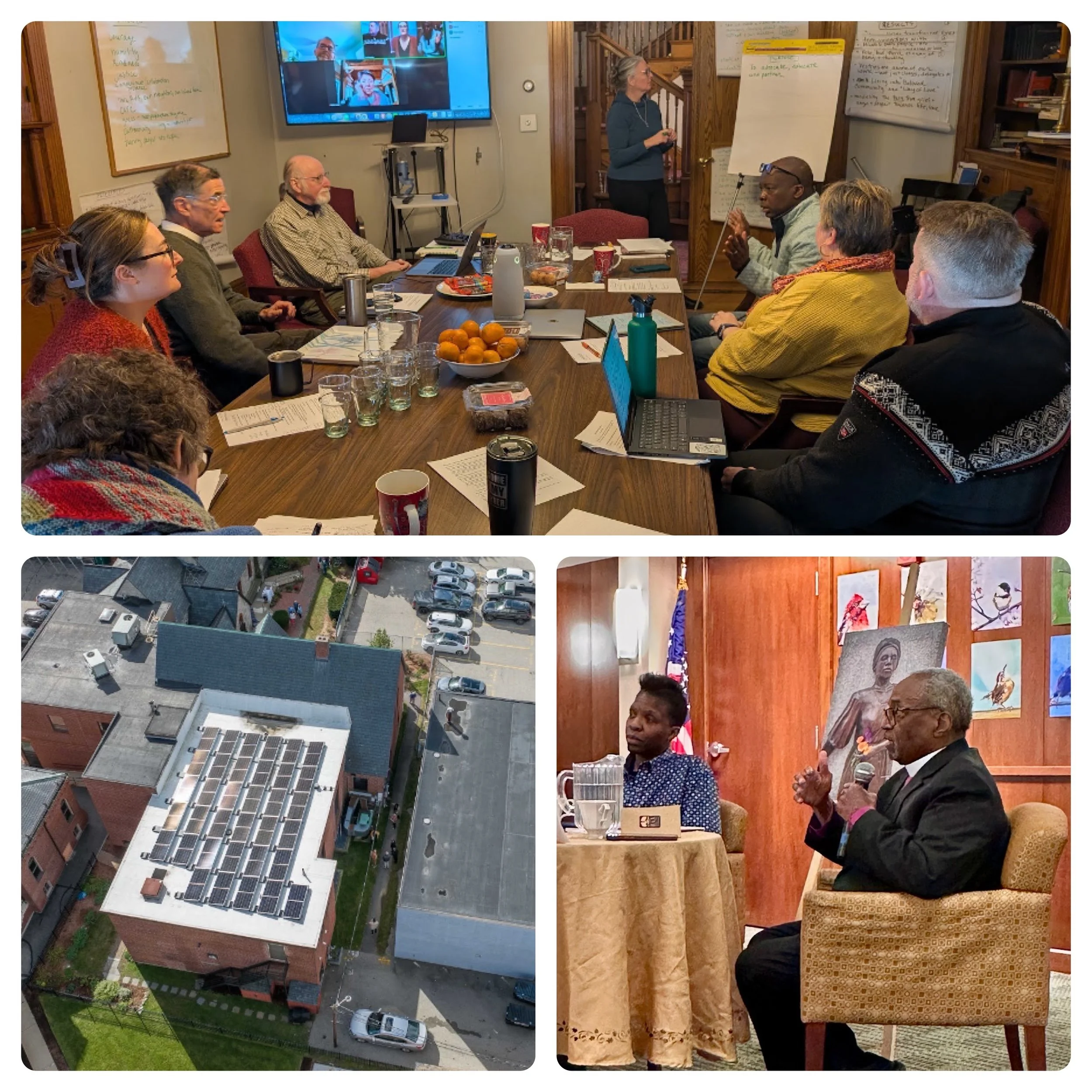
Top - Micah 6 Committee members at a planning meeting; bottom left - solar panels on the roof of the Good Shepherd complex in Nashua; bottom right - Tea Talk with Most Rev. Michael Curry, in Portsmouth.

Pastoral Directive: A Bishop’s Call to a Lenten Fast from Public Worship
Today, after consulting with clergy, lay leaders, public health officials and fellow bishops, I ask that each of our congregations set aside this coming Sunday as a Day of Preparation for a Fast from physically gathered, large group worship until April 5, the Sunday of the Passion: Palm Sunday.

March 13, 2020
To see a video statement from Bishop Hirschfeld, click HERE.
Dear Friends in Christ,
Today, after consulting with clergy, lay leaders, public health officials and fellow bishops, I ask that each of our congregations set aside this coming Sunday as a Day of Preparation for a Fast from physically gathered, large group worship until April 5, the Sunday of the Passion: Palm Sunday. We pray that this time of abstaining from public worship will not extend beyond this, but the circumstances relating to the COVID-19 outbreak may dictate otherwise.
The power of Christianity is found in its astonishing capacity to turn the worse news into Good News. This is the message of the Cross after all: a means of humiliation, degradation and death becomes the means of Life. Now, even as we contemplate and prepare for a time of physical distance, I am now convinced that it is for such a time as this that all of our talk in the past years about how we can actually be the Body of Christ in the world can happen in even more liberating and healthful ways. Now is an urgent time when we, instead of looking out only for ourselves alone, can reach out in love, albeit by phone or digitally, or in small and hygienic groups with news of faith, hope and love and with spiritual companionship.
As an Episcopal bishop, I cannot supersede the canonical authority a local rector may have making available the sacraments and worship of the Church. However, our canons clearly did not foresee the public health emergency we now face. What seemed even a week ago as a safe distance between those who have been infected by the COVID-19 virus and our own population is now rapidly shrinking. Therefore, I am calling upon us to act in solidarity with one another to suspend our in-person public worship, beginning the week of March 16th.
I sincerely and faithfully urge us all to see this peculiar time not as a catastrophe that instills fear, suspicion or shame among us, but as a spiritual fast and a civic duty, the reclaiming of a venerable and powerful spiritual tradition through which, like Jesus in the wilderness, we are called to renew our trust and our awareness of how God is blessing us, yes, blessing us, in this season of abstinence from physical touch and even, for a time, from corporate public worship. I believe that the church’s ongoing work to be reinvented, strengthened and renewed will be accelerated and deepened during this time. Heartily, I pray that we can share an Easter Communion like none other we have experienced in our lifetimes, when we can come together after the wave of infection passes.
There is precedence for this. In November 1940, St. Michael’s Cathedral in Coventry, England was destroyed by bombing during the German bombing invasion. Suddenly finding itself without its historic gothic building, the congregation formed small ‘foyer’ groups in their homes to continue to pray and care for one another. The Fellowship of Reconciliation, an international movement of peace and forgiveness, remains a tribute to the power of God’s love to turn horrible adversity into Gospel life.
It is now incumbent upon us to show Christ’s love and compassion for our neighbor and ourselves by practicing physical distancing (a preferable phrase to “social distancing” we’ve heard so much about.) Such respect for our physical space to lessen infection is how we can display our love for one another, even as we are bound together in the Body of Christ.
This Sunday, I urge our congregations to offer special prayers as we prepare for a suspension of public worship until at least April 5. If you have not already done so, please use the coming Sunday and the days after to create phone trees and form prayer partners by which you can stay in closer touch during this time. As we are being strongly discouraged by health officials to assemble in larger groups, let us be creative about forming smaller groups that allow sufficient physical space between you (the doctors recommend 4-6 feet or two arm spans), share bible readings and prayers. We can make good use of technology such as Zoom. Some congregations have excellent live-streaming of their worship services and we will list the links on the diocesan webpage dedicated to the Church’s response to this health crisis: (www. nhepiscopal.org/covid19).
I plan to stream worship services from here, our humble Chapel of All Angels in Diocesan House, beginning next week. We will need to make new provisions for those who have limited or no access to digital technology so that our siblings in Christ will not find themselves more isolated in this time. You can expect more updates and sharing as we journey together in this unusual Lenten period, a Lent that will lead us, God willing, to a glorious celebration of praise and thanksgiving for our Lord’s emergence from the tomb on Easter Morning! Of course, we cannot predict when this current crisis will abate, but this is my prayer today.
In the meantime, I close with my usual blessing, a blessing that seems even more apt now than at any time before.
Live without fear.
Your Creator has made you holy,
has always protected you
and loves you with a power and a presence
that is stronger than death.
And the blessing of Almighty,
the Father, the Son, and the Holy Spirit be among us now, this day,
and forever more.
Faithfully Yours in the Risen Christ,
Bishop A. Robert Hirschfeld
New Hampshire