Easter Message from Bishop Rob — April 2026
Every year, a close reading of the same gospel, even if we’ve read it over a life-time, brings something fresh, something green, and new—something surprising. It may be very familiar and obvious, but the Holy Spirit wants us to notice it as though for the first time because we need to hear it for the first time. This year what springs up as though a new sunrise is the verse in John’s gospel, at the end of the Good Friday reading, when we hear these words:
Now there was a garden in the place where he was crucified, and in the garden, there was a new tomb in which no one had ever been laid.
To this day, in the Holy City of Jerusalem, the Church of the Holy Sepulchre is also known as the site of Calvary, Golgotha, the place of the crucifixion, where tradition tells us that a relic of the cross was uncovered AND it is also the place where Jesus was laid in an unused tomb. It’s from the tomb, of course, where God raised him from the dead. Execution and resurrection happen in the same small piece of real estate: the place of unimaginable suffering by human hands and hearts AND the site of the world changing triumph of life over death, love over fear, forgiveness over hatred. It is the place our savior expresses humankind’s deepest abandonment by God and humankind. And it is the site of recognition: of us recognizing Jesus and then the risen Jesus seeing us as a friend. It is the site of the most holy “both/and” which is our life in the Risen Christ.
Our Calvaries are legions. There are so many, too many, and too heartbreaking to list. We all know what they are. The effects of human sin and cruelty, done by us and to us, are all around. We see them. They burden and grieve us. Those crucifixions lead us to times of both despair and hope. They are the reason for our prayers, our seeking help from God and each other. They are the cause of our thirst for righteousness, our struggles to forgive, and our cries to be forgiven. The desolate Place of the Skull and the Garden of Resurrection are layered on top of each other. The suffering and death of bodies, of communities, of hope itself, occur in the same place, and with even more power where we meet Jesus’ Rising. From out of the depth of the Sepulchre, Jesus calls us each by name just as he called to Mary Magdalene on that first Easter morning.
May your Good Fridays, your scenes of deep loss and sorrow be converted into a glorious resurrection, a rising to life, to a love and a life that is stronger than death. What courageous joy that gives us, to know in our bones that nothing, not even death, or the fear of death, will separate us from the love of God in Jesus. May that love and life rise in our hearts this Easter, and may every day be Easter. Jesus Christ is Risen. Alleluia.
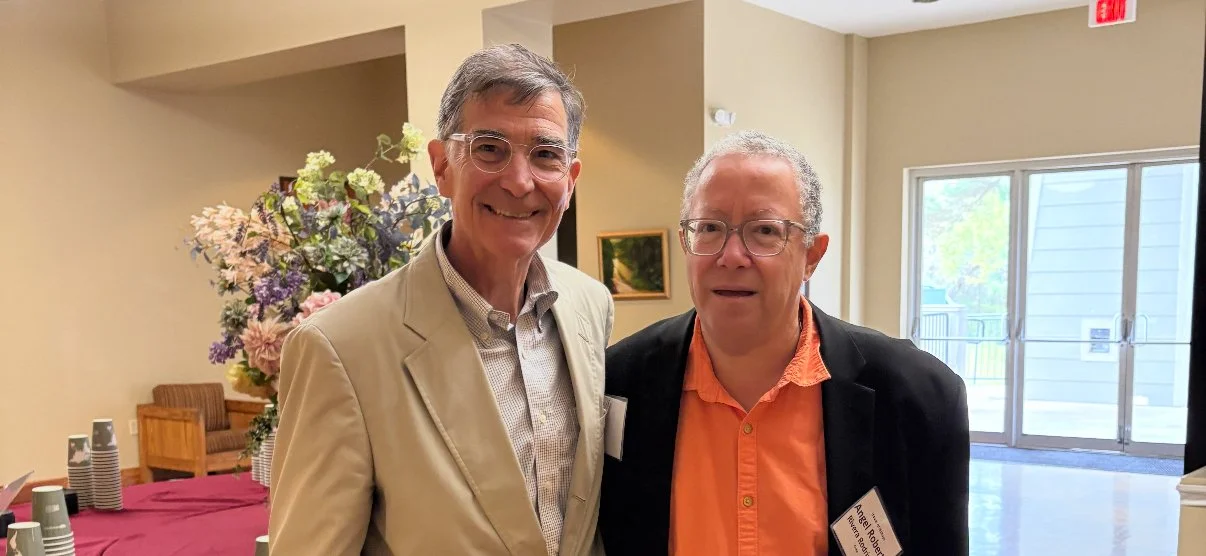
Bishop Rob and Bishop Angel, of Cuba, spend time together.
Report from Bishop Rob - House of Bishops Spring Meeting - March 17-25, 2026
It was a privilege for me to attend the spring gathering of the House of Bishops at Camp Allen in the Diocese of Texas. Though I always hate to leave my beloved Diocese of New Hampshire, I find the time enriching to be with my colleague bishops from the whole Episcopal Church, including from the dioceses in Latin America, Europe, and Taiwan.
By now a Word to the Church has been issued. Its intent is to offer a message of hope, unfailing in the Good News of Jesus Christ, even in times of crisis and discouragement. The new war in Iran—extending to the whole Middle East—the ongoing conflicts in Ukraine, Sudan, and other parts of the world weigh heavily on all of our hearts. Such suffering is a call for us all to pray, fervently, for efforts for a just and lasting peace. I am humbled by the work of my fellow bishops and their churches as they strain to hold together community in Christian fellowship even as forces of inhumanity toward immigrants are rampant and political rages foam.
We always come together in prayer. I have been part of a small but growing number of bishops who devote daily time on contemplation. We do this because as our world experiences such chaos, disorientation, and division, and even war, it is essential that Christians, especially Christian leaders, stay rooted in the awareness of God’s enduring, loving, and life-giving presence in the Incarnate, Crucified and Risen Jesus. Any word or action that is not rooted in prayer is, as Paul says, like a noisy gong to a clanging cymbal. I believe that the tenor of our discussions during the more business-oriented sessions of the House has been more open to deep listening and respect because of the critical mass of bishops who practice contemplative prayer, even those who consider themselves more activist on certain issues.
We spent much of our time discussing the state of theological education, particularly for the raising up of priests in our Church. The landscape of traditional seminary training has shifted significantly in the past 15-20 years. Our denomination has gone from relying on eleven 3-year residential and very expensive seminaries to something like seven, and each of those offering paths that are more accessible to postulants for Holy Orders in local settings, such as rural New England. Much of the changes in education have been driven by economic and demographic forces. The bishops’ discussion of these trends was much overdue. It was so confirming to me to see how our establishment of the School for Ministry, for laity, deacons and priests is something that is becoming more and more accepted and even normative in the wider church. As I spoke with bishops from Ecuador, Columbia, Puerto Rico, the Dominican Republic, Cuba, Massachusetts and Pittsburgh, I was heartened to learn how we are all facing similar challenges in the urgent need to raise up new ministers of the gospel. New Hampshire’s hybrid model is something looked to and admired by such different settings in the Episcopal Church.
We also heard of Presiding Bishop Sean Rowe’s diligent efforts to reform and reshape the organizational structure of the Episcopal Church in a way that supports evangelism, church planting, and redevelopment. There are significant and overdue changes being contemplated, about which we will hear in the coming months. This support for church renewal is of keen interest to us in New Hampshire as we initiate new missions in Manchester, Claremont, Portsmouth, and more in the coming years. This is so important to consider and welcome as demographic models predict a movement northward of the U.S. population in the coming decades. We have been praying for young adults and families for years. I pray that the spiritual and organization work we have done in our Diocese in recent years has helped us prepare for the growth that, God willing, is coming our way.
We discussed proposals in the wider Anglican communion that seek to deepen and further relationships with other provinces of the Church where relationships have been strained and in disrepair for a variety of reasons. The Nairobi-Cairo Proposals are fascinating to read because they imagine a church that is seeking ways to be in communion, and defining what communion means, in an era when the long-term trend for churches, religions, indeed almost every institution in society is toward greater splintering. Though the bishops are, in my view, rightly cautious about the proposals, it is encouraging to think of the many who continue to do the hard and sacred work of true reconciliation across serious differences of practice.
I was so grateful to hear a fulsome presentation from Bishop Ann Ritonia, Bishop Suffragan for the Armed Forces and Federal Ministries. Our church’s work to provide pastoral care and accompaniment to chaplains in the military, federal prisons and hospitals is truly essential, especially when so many of these chaplains encounter tremendous moral, spiritual, and physical trauma. I am grateful for Bishop Ann’s witness to both the gospel of Jesus Christ AND the U.S Constitution’s protection against the incursion of governmental establishment of religion of any kind.
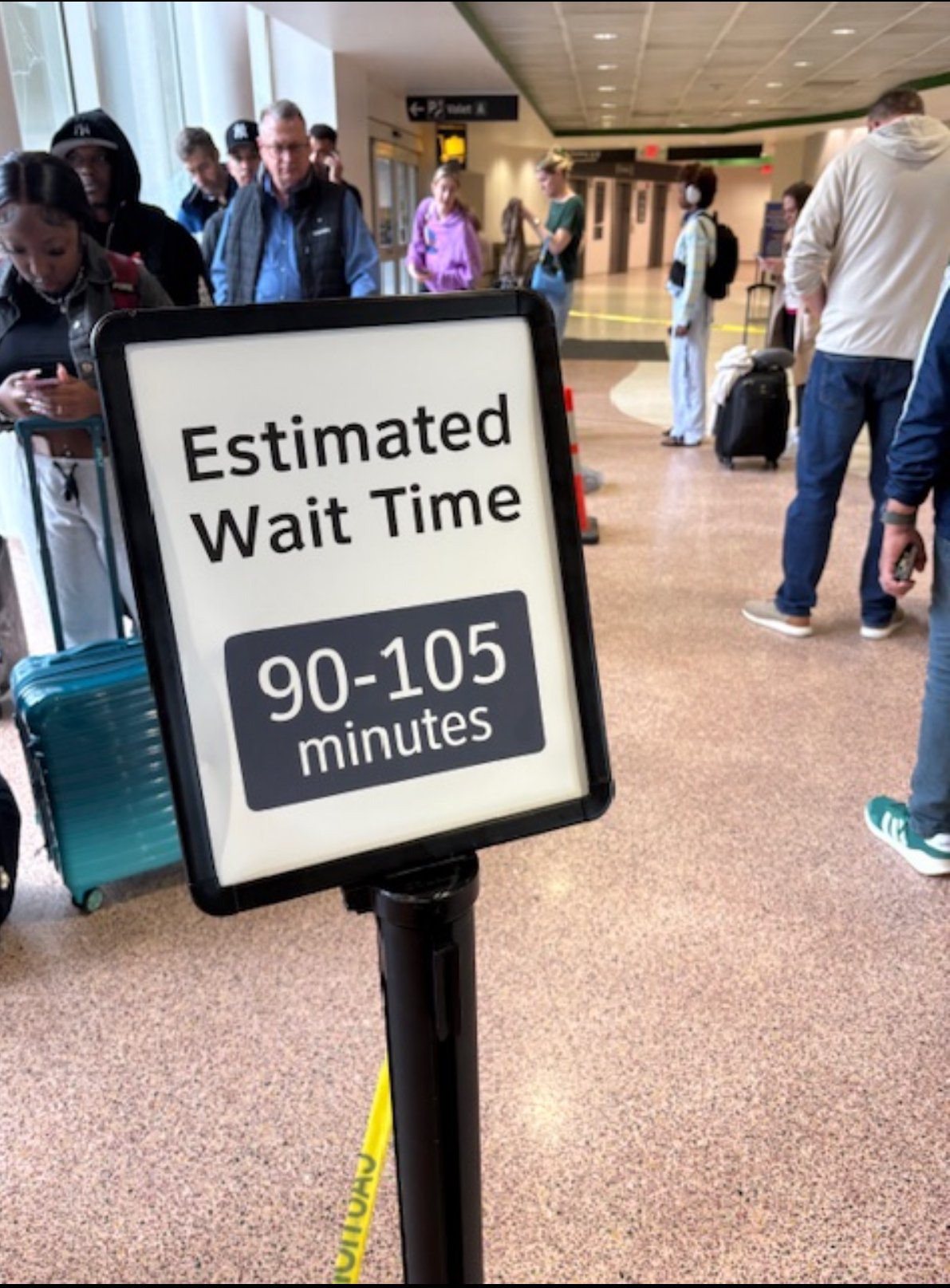
Finally, the return home through a Houston airport stressed with dramatically fewer TSA agents and many more ICE agents felt like being in a country that has changed. As I walked through the labyrinth paths to the security check points, along with thousands of others, I thought of the many pilgrims throughout millennia who have walked the Way of the Cross in Jerusalem, recalling the path the Jesus took from his entry into that City, to his actions in the Temple, to his Trial, his Crucifixion, his burial and his Rising.
I hope that wherever your journey and observances this coming Holy Week takes you, you may know how Jesus Christ walks alongside you, sharing your hopes, your joys, and the depths of your sorrows.
He will raise us all in peace and glory.
Yours in the Risen Christ,
+Rob
An Easter Message from the Right Reverend A. Robert Hirschfeld, Bishop of New Hampshire to the Episcopal Church of New Hampshire
There is certain feeling about Easter morning that the gospels strain to describe. St. Matthew says that Mary Magdalene and another Mary are filled with both joy and great fear. In the tender scene described by John the Evangelist, Mary Magdalene seems confused, her eyes clouded in tears, until she hears the risen Jesus speak her name — “Mary” — then immediately in her joy she reaches out to hold Jesus. But He fends her off, saying, “Do not hold on to me.”
So, fear, terror even, mixed with joy, relief, exhilaration — that’s all part of this morning. There’s this sense of, “Come close, go away. See me, but don’t seek to close me in.” I think we are all, each of us, invited this season of Easter to recall and be aware of our own mixture of fear and joy whenever and wherever God’s love calls us into a new way of being. The gospels tell us, every year, that there is no such thing as a ho-hum, ordinary, or familiar Easter. Today our hearts are again quickened, which is the old word meaning to be made alive again, vibrant, and new.
Every year, indeed, every day, God makes a raid on death, on hatred, and on sin. And by sin, I mean anything and everything that attempts to draw us away from the love of God, from the love of neighbor, from the love of God’s creation, from the love of ourselves as children of God. The first witnesses of the Resurrection are given indescribable cause to delight and rejoice — after all, death, ridicule, shame, hatred no longer need threaten us, Alleluia! AND, at the same time, they are also left with an element of longing for even more. Even more.
Jesus keeps resisting being grabbed or confined, either by a grave, a cross, or our own limiting embrace. Jesus seems to be saying, “Keep looking, and in looking keep finding me” — even in Galilee, that back-country, the place in our own experience from where it is said that nothing good can come.
So, every day, every year, every Easter, every moment, can be a day and a moment of Easter surprise. Christ ever more rises again, showing what the Gospel says: the divine one is in our neighbor, the one who, like Jesus, bears wounds. Even the neighbor whose wounds lead to other wounds. Look for the risen Christ in the hungry, the thirsty, the forgotten, the imprisoned, the sick, the lonely, the ones who are overlooked, the despised and the rejected. Look for Jesus there. Look for joy where you would expect to find nothing but hatred or fear or despair. Look for signs of Earth’s own resilient desire to be reborn when we begin tending it with the tenderness of a good gardener, like the one we meet in John’s Gospel on Easter morning. Look for Jesus the Risen Christ in the person you have may have had a hand in rejecting, even insulting to the point of denying their dignity.
When the first witnesses of the Resurrection realize Jesus is risen, strangely, they don’t get everything they hope for or wish for. They get much more: they get the longing, the quickening of heart, to reach out to Jesus in everyone, in every body, no matter who.
No wonder there is also some fear involved; the word the gospels use for fear is “phobia”. And God seeks to melt away all our phobias into pure joy and freedom to serve and celebrate again, and again, and again. Every time we think we have pinned down a class of persons or a circle to love, banning all others, God insists to show us how yet another barrier, yet another limit to our love, is abolished on the Cross. On the Cross God’s loving arms extend to all humankind, every language, every race, every gender, and age. And even the Earth itself longs to share in the restoration of all creation on this day. Just notice the role of the Earth and how it plays in the gospels announcing of the destruction of death.
And if that does not strike both terror and joy in our hearts, both confusion and clarity, both fear and amazement, awe and awkwardness, then perhaps our work this Easter morning is simply to pray for God to roll the stone away and out of our hearts, the heart of our church even, and from the heart of this whole broken world which God holds in his wounded and yet His living hands.
“He is not here”, the angels say to us, “for he is risen.”
Go, seek Him among the living, and come to know Him in the life God longs for you to live. Alleluia.
Bishop Rob's Address to St. Paul’s School Spring Convocation Chapel of St. Peter and St Paul
Welcome back to this campus that hasn’t quite shed all of its icy cloak. Not only St Paul’s, but all New Hampshire, has been waiting for your great enthusiasms and fervent energies to melt all the vestiges of the winter and to be harbingers of Spring. Thank you for returning. And thank you Head of School Giles and Chaplain Wydner for the honor of inviting me to return to share a thought or two on the theme of Daring Greatly to Dream, Hope, and Engage.
I wonder how the readings we just heard land in your ears this morning. Michelle Obama’s call to live without fear and to not be afraid resonates with me, because, well, I know fear. I think about fear a lot. It occurs to me in preparing these remarks that anyone who makes religion or spirituality their occupation is probably doing so because fear--the facing it, the study of it, the dissolving it, the striving to live free of its constraints—is at the core of all religious teachings, no matter what faith. Fear is woven deep in the human experience. Fear of death, of pain, of injury, of losing our loved ones. These probably represent our most obvious or ultimate fears. For most of the people I know, those things do indeed scare and trouble them, but what really terrifies them to the point of driving them to distraction and stealing them of their joy and happiness is another terror. It’s the fear of failing, the fear of seeming a fool, a moron. Most of us are afraid of looking silly, unworthy of dignity. Who wouldn’t avoid being seen wrong or weak? Or on the receiving end of insult? The fear of not keeping up our appearance of competence or attractiveness can rob us of our joy, inner peace, and balance.
In fact, our fear of these things can make us so uncomfortable that we don’t even want to come close with those persons tainted with failure, weakness, or flaws of appearance or character. We fear that by even getting close to shame, it will somehow rub off on us, contaminate, or infect us by association. I consider it nothing less than tragic that the great religions of the world, my own definitely included, have been so twisted and distorted so as to endow fear of the other with a kind of power that creates notions of the unclean, outcasts, untouchables, undesirables. Labeling others as inferior, out of our own fear of the unknown, is the first step to oppressing others, destroying community, and threatening all sense of the holy in the human. That fear is at the root of unimaginable and historic oppression.
Wouldn’t we rather live in the way that Michelle and Theodore describe: with daring, with courage and a freedom that allows one to give it all for the sake of a cause larger than oneself? But it can’t really happen until we loosed our tight-knuckled grip on reputation, or status. Freedom and joy is in that loosening. There’s a lightness to living that way, a lightness of being, a kind of ease with which to move in this world. I want that, and I admire it in others who have it. But too often fear ensnares, makes us timid, terrified of making a mistake. I attribute my own failure to learn a language better than I have or my failure, learn to play a musical instrument to my own fear of making a mistake or sounding foolish, and so there you have it. I so admire those of you who have broken through that barrier and do it every day in order to learn something new, and bring goodness into the world. As an aside, I wonder if our nation’s failure to move into a space of more racial harmony and inter-religious, interethnic understanding is, at its base, a fear of making an error or be awkward in a culture of offense that shames in judgement rather than converses with the presumption of mercy and grace. How to dream hope or engage big when too often we find ourselves trapped in feeling pretty small?
So the theme is daring greatly to dream, hope and engage, and it’s taken me to address fear. Michelle Obama and Theodore Roosevelt are no slackers. They are among the highest achieving personalities in our nation’s history. They have been revered, admired, emulated, listened to for, well, in Roosevelt’s case, over 100 years. Great people. People who have faced down fear and timidity.
No doubt there are persons in this Chapel who are headed to those heights. We’ll be reading of your achievements for the benefit of our society in years to come. Who knows who among us that will be? But that’s not the kind of “boundless promise” or “ triumph of high achievement” that I’ve come to speak about...at least I don’t think so. But congratulations in advance, anyhow, whoever you are.
Our doorway and portal to great dreaming, hoping, and engaging is not in the attainment of fame or office, rank or status or power or dominance over others. I more and more believe that it’s in becoming freed from our most debilitating fear which is the fear of shame, of humiliation, of being or even appearing wrong. That’s that’s a fear I’ve had a small measure of success in moderating and being healed from. Mostly it comes from learning to fall, learning to fail, learning to risk being clumsy, even lost. Learning to accept your neighbor, and yourself, with mercy.
One of my favorite characters in recent literature comes not from a book that they assign in my course work in English or Comparative Literature. It comes from the work of the celebrated Canadian detective novelist Louise Penny. She writes mostly about a small fictional town in the Eastern Townships of Quebec, called Three Pines. It contains a small café with good food, an inn, a few artists, and some eccentric characters. Three Pines is the setting of some crimes, usually murders, sometimes even sinister geo-political plots, so you can’t call Three Pines a quaint village. Anyway, the hero of these novels is a gentleman named Chief Inspector Armand Gamache, a kind of Canadian version of the FBI: the Montreal Securité. Gamache is no superhero, really, nothing physically or intellectually outstanding. He’s just an average fellow who shows up, is curious, kind, faces personal demons, and dilemmas, disappointments. But there’s a sense of decency about him that fascinates me. He’s not a hardboiled, tough guy or calloused like so many in the detective genre of literature. Book reviewers have pondered if the popularity of Penny’s novels has to do with the deep thirst our society has nowadays for just basic decency, even among broken and flawed human beings, particularly men in our culture. That thirst for decency might also explains the runaway popularity of Ted Lasso.
Anyway, Gamache always seems to find the culprits, despite making some blunders and mistakes along the way. His trainees and those who surround him sometimes ask him, “Inspector Gamache, how do you keep going? What gives you hope, and purpose, what keeps you hopeful, despite everything seeing the worst in people? They seem to ask him for the secret recipe for his success, his gentle greatness, if you will. Nowadays we hear people speak of having a super-power. And invariably, he answers with four simple sentences:
Are you ready? For Armand Gamache’s secret to daring greatly to dream, hope and engage?
Here they are:
I was wrong. I am sorry. I don’t know. I need help.
Mostly likely, employing these statements won’t make you look good like either Michelle Obama or Theodore Roosevelt in the short run. They are not glamorous, or particularly brilliant. But what thorny knot in a relationship, or a decision, what roadblock in self-awareness, what political quagmire could not be significantly resolves, melted, lessened and put at ease if more and more of us, could learn to utter these statements with integrity of character and soul? “I was wrong. I am sorry, I don’t know. I need help.” Underneath and behind these sentences is an unmistakable courage, an inner security and strength, a fearlessness. There’s an unspoken and resilient hope and the fierceness with which to engage in relationship--not only with others, but even with the whole Created order that longs to be healed. Imagine humankind saying to the Earth, “We were wrong. We’re sorry. Teach us. We need help.”
Of course, the story I come back to every year at this time is the story of Jesus, who we are told never sinned, never made a mistake, though there are some legal and religious trespasses with which his opponents ensnared him. In the end Jesus is utterly free of fear, not only of agony, pain, even death, but from the debilitating need to keep up Appearances, to look good, right, proper. The poet W.H. Auden ends a poem about the 20th century pastor Dietrich Bonhoeffer who was martyred by Nazis, Christian Nationalists, in the final days of WWII. The poem, Friday’s Child, is a meditation on the spiritual freedom that God longs for us all to enjoy and how that freedom is offered on Good Friday. The final stanza read
Meanwhile a silence on the cross
As dead as we shall ever me
Speaks of some total gain or loss
And you and I are free
To guess from that insulted face
Just what Appearances he saves
By publicly suffering
A death reserved for slaves.
So allow me to bless you and I have come to bless every congregation in New Hampshire--the “Live Free or Die” state):
Live without fear
Your creator has made you holy, has always protected you. And loves you with a power and presence that is stronger than death.
And the blessing of God be among you this day, this Spring term, and forever more.
Testimony in Opposition to Bill HB619-FN
I urge defeat of Bill HB619-FN.
As it stands, the bill:
· Bans gender transition healthcare for minors.
o As the Association of American Medical Colleges stated in 2021, “Efforts to restrict the provision of gender-affirming health care for transgender individuals will… promote discrimination, and widen already significant health inequities,” and that such efforts “undermine the doctor-patient relationship and the principle that doctors are best equipped to work with patients and their families to arrive at shared decision-making.”
· Bans affirmation or education related to being transgender or nonbinary in public schools
o By prohibiting the affirmation of transgender or questioning children by using the name or pronoun that affirms their gender identity, this shows a lack of a basic level of care and respect for who they are, and their feelings of safety in a school setting.
· Changes the definition of conversion therapy in a way that fails to recognize the coerciveness frequently inherent in conversion therapy
o Changing the definition of conversion therapy by requiring that it must be against an individual’s clearly expressed will is concerning, as many minors and young adults are coerced into conversion therapy by parents or guardians upon whom they are financially dependent and are not able to clearly and meaningfully state that it is against their will.
Our society is currently in the middle of an animated — and often irrational — debate about definitions of gender identity and sexuality. Though seemingly new to our times, these topics also captivated ancient cultures, including those from which the Jewish and Christian testaments were written.
I speak as a Christian leader who is equally concerned about the mental and physical health of our younger generations. The State, as it should, has a legitimate interest in promoting the emotional and physical safety of New Hampshire’s children and youth. However, while claiming to promote and protect young persons and their families navigating the changing norms of our increasingly sexualized culture, this proposed bill in its sheer broadness does not promote or respect their freedoms.
The current bill, in its wideness of scope, is an overreach of legislative action that serves only to frustrate and criminalize such free conversation and considered discussion rather that promote it. This proposed legislation threatens to make children and their families collateral damage in a damaging fray of politics.
Instead of this broad-reaching bill, what is most needed in these times is a compassionate, considered discussion that includes respected leaders from the medical, psychological, educational, and religious communities, as well as transgender youth and their families.
In the Episcopal Church, our foundational beliefs are represented in our baptismal vows. As Christians we commit to seeking and serving Christ in all persons, loving our neighbor as ourselves, striving for justice and peace among all people, and respecting the dignity of every human being. We believe that God loves us all – no exceptions. Isn't disregarding and ignoring the dignity of persons who identify as LGBTQIA+ a violation of a sacred trust? Let us meet these transgender youth and their families where they are and embrace them as children of God and of New Hampshire.
Bill HB619-FN contains more heat than light to the considered and respectful conversations now underway in our households, in our houses of worship, in our schools, and in our medical and mental health venues. This is a discussion for those venues, not for the floor of the State House.
I urge defeat of Bill HB619-FN.
Sincerely and Faithfully,
The Rt. Rev. A. Robert Hirschfeld
Bishop of the Episcopal Diocese of New Hampshire
Ash Wednesday Message from Bishop Rob
Create in me a clean heart, O God,
and put a new and right spirit within me. (Psalm 51:11)
The reason why we celebrate, and not merely observe, Lent, is because it’s the one season of the church year when we are specifically encouraged to imagine being recreated from scratch, as though brought right back to the beginning of time. Lent should not be a season of morbid self-preoccupation, punishing ourselves with comparisons of images or people we assume are more holy, more worthy, more prayerful, more generous or devout than we are. Instead, Lent is a season in which God invites us to become who we are at the core of ourselves. It is a time for us to get ready to live again, as though for the first time, as Jesus would have us live. It is a time to consider who is the person, and what is the church, that God seeks to reshape out of the ashes, out of our distracted and often self-absorbed lives? This is the season of new beginnings, even if — especially if — we’re convinced that we’ve run out of new beginnings.
The best part of smearing our foreheads in ashes at the beginning of Lent and hearing, “remember you are dust and to dust you shall return” is that in those actions we are asserting: Yes! God is ready to start all over again, taking what is wonderful and not so wonderful about each of us, and reshaping a new creation. A new creation that looks and talks and breathes and sees more how the Beloved Christ looks and talks and breathes and sees and heals and rises.
As a diocese, we too are recommitting ourselves to this work of new creation. New things are being born out of dust even as some things are being returned to dust with the promise of new life to come in God’s time.
In January, we closed the mission of Faith Church, Merrimack. This was a difficult and painful process made graceful by the faithful and courageous members who faced this loss with kindness and the certain hope that God will not abandon them as they begin to worship in neighboring congregations.
Around that same time, I also announced that Christ Church, Portsmouth would cease being a mission and would become a Gospel-oriented Community in order to intentionally explore a new purpose and new vision for that property. A vision that may include housing, childcare and youth ministry, a revised community worship space, and a refreshed way to honor the formerly enslaved black persons who are buried on that property along with the beloved parishioners and family members more recently deceased. This new effort was preceded by the ending of the Seacoast Shared Ministry, a partnership between Christ Church, Portsmouth and Trinity, Hampden that had lived through its lifecycle and needed to end in order for something new to emerge.
The Spirit urges us to reimagine the ministry of the two parishes in Claremont: Union and Trinity. How could the stated purpose of the Episcopal Church of New Hampshire — to claim the power of God’s love in our worship, learning, and service so that all may know the love and joy of Jesus Christ — inspire these two congregations to coordinate for a more effective mission for God’s sake? I have no doubt that Jesus is calling us toward some new vibrant creation in Claremont to bring the hope and joy of God to that often-neglected part of our State.
As the church faces a clergy shortage, we are witnessing the end of an era that many of us, including me, never thought we’d see. The experience of church where one priest (or more) served one parish, and that priest did all things spiritual, religious, and administrative while the lay members of the church showed up on Sunday, said their prayers, took communion, paid a pledge and then went home to life as usual...that vision of church, to be blunt, is dust, or will level the church to ashes. Before our eyes, God is creating something new — we can’t see all of it, but we do see some of the contours. The new creation will undoubtedly embrace a more spiritually formed and equipped laity that is ready to preach, teach, offer prayers for healing, advocate in the public sphere for a restored humble relationship with earth, and with each other in the Beloved Community.
The School for Ministry, with the astute and capable leadership of Dean Kelly Sundberg Seaman, has a growing number of lay and ordained students preparing for roles of leadership in all corners of our diocese, and inevitably in all corners of the Episcopal Church. With God, the Commission on Ministry and Standing Committee aligning we will be ordaining four priests by the end of the year, all to serve here in the Granite State and possibly in shared ministries in Maine and Vermont.
Which brings me to the evolution of those collaborations. We have just entered a new agreement with the Diocese of Maine. As of March 1st, Canon Tina Pickering will share her duties and valued gifts with our friend Bishop Thomas Brown, becoming Canon to the Ordinary for both dioceses. Many of the details of this new arrangement will be shaped by experience and the Holy Spirit in the coming months. In broad strokes, Tina will continue to oversee transitions and deployment in New Hampshire (the processes of finding the right clergy for the parish openings), and she will continue to coordinate the staff of Diocesan House. She will also serve as “chief of staff” for the Diocese of Maine and serve as senior advisor to both Maine and New Hampshire bishops. In the meantime, Vermont Bishop Shannon MacVean-Brown and I continue to look for opportunities to share leadership and extend collaboration, not merely for its own sake, but for the sake of furthering the Beloved Community in Northern New England.
There will be some shifting of duties and roles of other members of our staff here on Green Street: the Rev. Louise Howlett’s role to help me provide support for clergy continues to grow, as does the Rev. Kelly Sundberg Seaman’s work to expand opportunities for vocational discernment and formation of ministries, both lay and ordained. Shelli Gay, my executive assistant, the one who keeps me organized and scheduled for visitations will soon devote half of her time to the success of our From Deep Roots, New Life campaign which we hope to bring to completion this year.
Lent has often been described as a journey toward the new life ushered in by the Resurrection. My fervent prayer in the coming weeks and years is that we see all our life together—the beginnings, endings and new beginnings—in the light of the words of Jesus Christ: “Behold, I am doing a new thing!”
Yours faithfully,

Printable version here.

In support of HB 61
This is to voice my support of HB 61, relative to teaching on discrimination in the public schools and discrimination in public workplaces.
There have been reasons offered in support of the legislation that diminishes a teacher’s ability to discuss elements in the history of the United States that could be deemed divisive. Among them is the notion that to discuss the history of patterns of unequal treatment of people of color by a majority white population--treatment that includes chattel slavery, inequities in education, healthcare, housing, environmental safety, law enforcement and incarceration—would instill shame, guilt, and a sense of unworthiness among white students. The public has been warned that discussion of critical race theory or other concepts are dangerous for young minds (and souls) to be exposed to for fear that they would make us too aware of the inequitable treatment of those who have suffered—and, in fact, continue to suffer from conscious or unconscious biases based on differences of race, gender, class, religion, sexual orientation, or physical or mental capacity.
Shame is a power force, and the concern not to burden our young people with the notion that they are, by reason of their being a human being in whatever category, makes them essentially a bad person. Shame is more debilitating than remorse. Remorse says, “We have made a mistake, and we want to learn how to do better.” Shame says, “Not only have we made mistakes, we are a mistake and no matter what we do, we cannot make or do good.” I trust that nobody of good faith, be they conservative or liberal, black, brown, or white, gay or straight, spiritual, religious, (or neither) republican, independent or democrat, wants our citizenry to be shackled with the burden of shame. Shame does not allow us to live free, neither spiritually nor emotionally.
But discouragement-to the point of legally prohibiting- open, honest, often clumsy and awkward conversations about our shared history as a state and a nation is not the way to dissolve shame. In fact, such prohibitions serve only to say to our students and population, “let us be afraid of facing our past because we can never heal from those sins the effects of which we just have to accept.” That sounds to me like a statement of fear and cowardice.
As a Christian, I see one of the most soul and social liberating scenes is when the crucified Jesus, bearing the wounds of his torture and death, enters a locked fear-filled room to face those who were complicit in his denial and grisly death. The wounds are not erased, forgotten, or avoided—he actually invites one of the disciples to place his hands into the wounds. Were the band of disciples feeling remorse, shame, fear? No doubt. And yet, the Risen Jesus comes not to shame or punish or make them feel anything but that reconciliation is possible. In other words God gives us back our histories, as complicated as they are—in all their bright successes and abject failures--because in facing our histories is how true learning and growth occur.
For this reason, I urge passage of HB 61, repealing and replacing the 'Banned Concepts Act,' which was passed into law via the state budget in 2021.
Sincerely and Faithfully,
The Rt. Rev. A. Robert Hirschfeld
Bishop of the Episcopal Diocese of New Hampshire
An Advent Message from Bishop Rob
I’ve been thinking much about time of late. It seems such an elastic notion. On the one hand it seems we were just in the middle of summer, so how is it we’re already seeing the tokens of Christmas up on the streets and in the stores? On the other hand, we also feel like time has either slowed to a cold creep, stopped, or even been thrown into reverse. Wars, violent setbacks in what seemed like a steady march for human rights and dignity, the ugly reappearance of symbols of hatred in our streets — even in a state that claims to allow all persons to be free — all can make us question that “long arc of history” and whether we can be so certain of its curve toward justice. The Psalms speak of how brief our life can be and yet there’s the refrain: How long, O Lord, how long?
It’s in just such a mixed experience of time that Advent invites us to find ourselves. When we read the Gospels, we find that’s precisely how the God of eternity entered the human experience in Jesus Christ. God comes to be present, fully present, in Jesus, who holds in his mind and heart joy, hope, agony, anger, and grief, not so much in sequence (as though first this, then this), but all at once. He doesn’t resolve the tension of time in order to love. And Jesus invites those who wish to know him and live the holy life (a life that seeks to mirror God) to keep in mind eternity. I find that when I am most anxious, in doubt, or fearing about what is happening, when I remember to pray, I am led to know God’s peace that passes all understanding in a sense of Presence, which never fails. God just is, in all of our lives and in the world’s turmoil. Right. Now. Always. Praying for God’s Presence, in the present, simply means allowing our minds and hearts to see what is, no matter what it is, with the eyes of Jesus, who never saw anything apart from God’s eternity.
I am drawn to that word presence. We’ve always been taught that Advent means an arrival, a coming. Usually, we think of Advent as the short season that gets us ready for Christmas. But to dwindle it down to just these 30 days deprives it of its deeper purpose. In Advent, we awaken and look for what the ancients called the “Parousia,” which is the Greek word for Presence.
We have a little sticker on our refrigerator that says:
Yesterday is history.
Tomorrow is a mystery and
Today is a gift.
That’s why they call it the present.
It’s not without its corniness, but is there not some life-giving encouragement in the invitation to awaken and to see the signs of God’s miraculous healing and reconciliation and to feel the sharpness of how God’s kingdom is not yet here? I believe the longing and the striving, the waiting, with both laughter and tears, is just where God wants us to join God. That’s the space where Jesus came to dwell among us and to love us in all our beauty and brokenness. Perhaps that’s why scripture so often speaks of “the fullness of time.”
This Advent, let us be open to the all of it.